





Chuck and Patti McGinnis have spent decades shaping the way people experience buildings, campuses, workplaces and healthcare environments across the country. As the sustainable infrastructure vice president of sales and development for North America with Johnson Controls, Chuck oversees energy and infrastructure initiatives that influence billions of dollars in guaranteed energy savings annually. He and his teams have helped organizations modernize facilities, improve sustainability and rethink how buildings support the people inside them. Chuck’s work has spanned university campuses, hospitals and large-scale infrastructure systems across North America. Each year, the projects his teams oversee account for roughly $6 billion in guaranteed energy savings.
Patti focused her career on designing environments that support and enhance our human experience. As an interior designer within the commercial architectural field, she found success in responding to and prioritizing the changing dynamic of the new ways that people work, live and heal. She prioritizes solutions that go beyond aesthetics, considering how light, sound, air quality, color and materials within an environment can be used to influence emotion, comfort, health, productivity and human behavior. This approach has served her clients well and continues to guide her work today at McGinnis Design LLC. Together, Patti and Chuck’s careers reflect the power of applied learning, a holistic mindset and the education they received at UW-Stout Polytechnic.
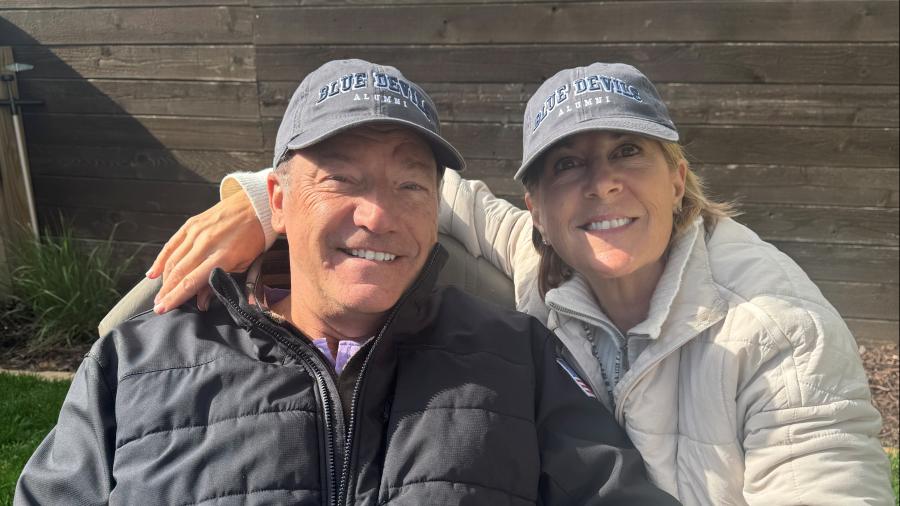
Chuck and Patti met while attending technical college in Madison. Patti discovered her passion for interior design and decided to continue building on that foundation. UW-Stout Polytechnic’s strong reputation and willingness to accept transfer credits made it the right fit. Chuck, initially focused on baseball and real estate, followed Patti to Stout and redirected his career path, which led to early leadership opportunities on campus and beyond.
At UW-Stout Polytechnic, Patti benefited from interdisciplinary, project-based learning that mirrored professional design challenges. Her senior design project required collaboration across disciplines, bringing together students in graphic design, marketing and business strategy to develop a concept focused on a community wellness and rehabilitation center. The experience strengthened her skills and validated her instincts when the project earned first-place recognition, an early confidence boost in her career. “At Stout, we worked across disciplines and integrated all of our ideas together. It mirrored the real world in a way that was incredibly valuable,” Patti said. “I had an amazing portfolio when I left Stout, and I was told that repeatedly in interviews. I received a great education at UW-Stout. It served me well.”
For Chuck, the turning point came from an unexpected place. After being told his academic record would likely limit his opportunities, he leaned into the recommended coursework, enrolling in technical classes ranging from power mechanics and electronics to strength of materials and alternative energy systems. As a result, Chuck developed a practical understanding of complex systems that would later distinguish him professionally. While many business students learned theory in the classroom, UW-Stout Polytechnic gave him direct experience working with real equipment and systems, helping him quickly understand the technical side of buildings and infrastructure once he entered the workforce. “That applied, lab-based education gave me an advantage,” he said. “You can take business classes anywhere. The industry and technology piece was what changed everything for me.”
That applied learning environment became the foundation for a nearly 40-year career in energy and infrastructure leadership. Chuck joined Honeywell immediately after graduation before eventually building a national leadership career with Johnson Controls during a period of massive transformation in the energy industry. Early in his career, energy efficiency was often treated as an afterthought. Today, it sits at the center of organizational strategy, sustainability planning and long-term infrastructure investment.
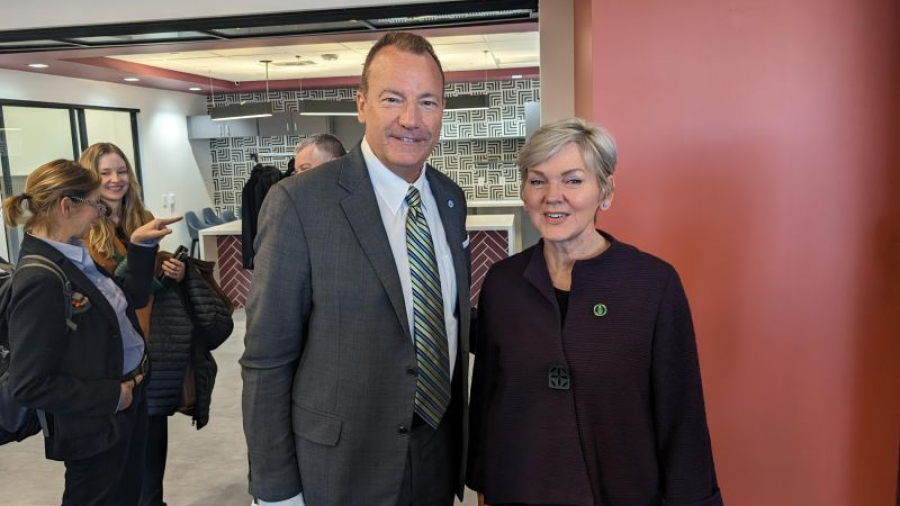
His work focuses on helping organizations create smarter, more sustainable buildings by integrating technologies and systems in ways that deliver measurable operational and financial results. Universities, healthcare systems and major institutions rely on those projects not only to reduce energy consumption, but to improve the overall human experience within their facilities. “What we do is make buildings better for people to live in, from an experience perspective, from a safety perspective and from a sustainability perspective. The work is technical, but ultimately it impacts the human condition.”
One of Chuck’s most impactful projects helped transform a major public university campus through a $275 million modernization effort. His team replaced an aging coal-fired steam plant, upgraded core infrastructure and reimagined student housing to better support today’s learners. The project reduced outdated housing inventory by 1,000 beds while creating a more connected residential experience centered around modern amenities and community spaces.
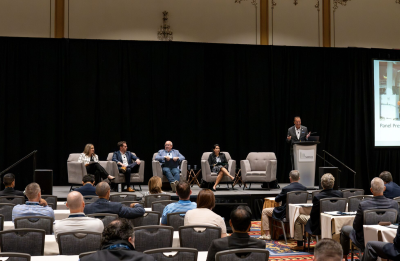
Today, Chuck’s leadership extends far beyond technical systems. He mentors and develops teams across North America, helping lead an organization that supports hundreds of employees and their families. Much of his work now focuses on coaching leaders, building high-performing teams and helping organizations adapt to changing demands in energy, infrastructure and sustainability.
While Chuck’s work transforms large-scale systems, Patti’s work shapes how people feel and function within them. Early in her career, she developed a strong foundation in commercial interiors and space planning, skills directly shaped by her education at Stout and strengthened through years of work with architectural firms and commercial design teams.
As Patti’s career evolved, so did her focus on the deeper relationship between people and the spaces they inhabit. “Design is about supporting human needs. That became my driving force,” Patti says. “I realized I actually had the ability to change the way people work, heal and live through the spaces around them.”
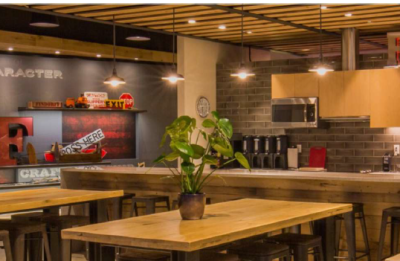
One project stands out as a testament to that philosophy: while leading the redesign and expansion of a hospice care facility, Patti helped pioneer a deeply human-centered approach to healthcare interiors. Rather than beginning with finishes or furniture, the team focused on the emotional and sensory experiences of patients, families and caregivers. Acoustics, lighting, air quality and material choices were all intentionally designed to create calm, dignity and comfort during some of life’s most difficult moments. The project became deeply personal for Patti, whose own experiences navigating care for her parents further reinforced the importance of environments that support both physical and emotional well-being. More than two decades later, the facility still reflects the intentionality of that work, a lasting testament to the power thoughtful design can have on human experience.
After years of experience in commercial and healthcare interiors, Patti launched McGinnis Design in 2015 with a deep understanding of both the technical and emotional dimensions of design. In addition to her client work, she continues exploring the relationship between design, color theory and human behavior, including research and writing focused on how environments influence emotion and well-being.
The common thread throughout Chuck and Patti’s work is the understanding of how environments influence people’s lives. Their projects influence how students experience campus life, how patients and families navigate healthcare environments, how organizations reduce energy consumption and how people feel in the spaces they occupy every day.
Their pride in UW-Stout Polytechnic is rooted in the foundation the university provided. For Chuck and Patti, it was the place where curiosity became confidence and hands-on learning opportunities allowed two students searching for direction to discover careers that would ultimately shape industries, communities and countless lives.