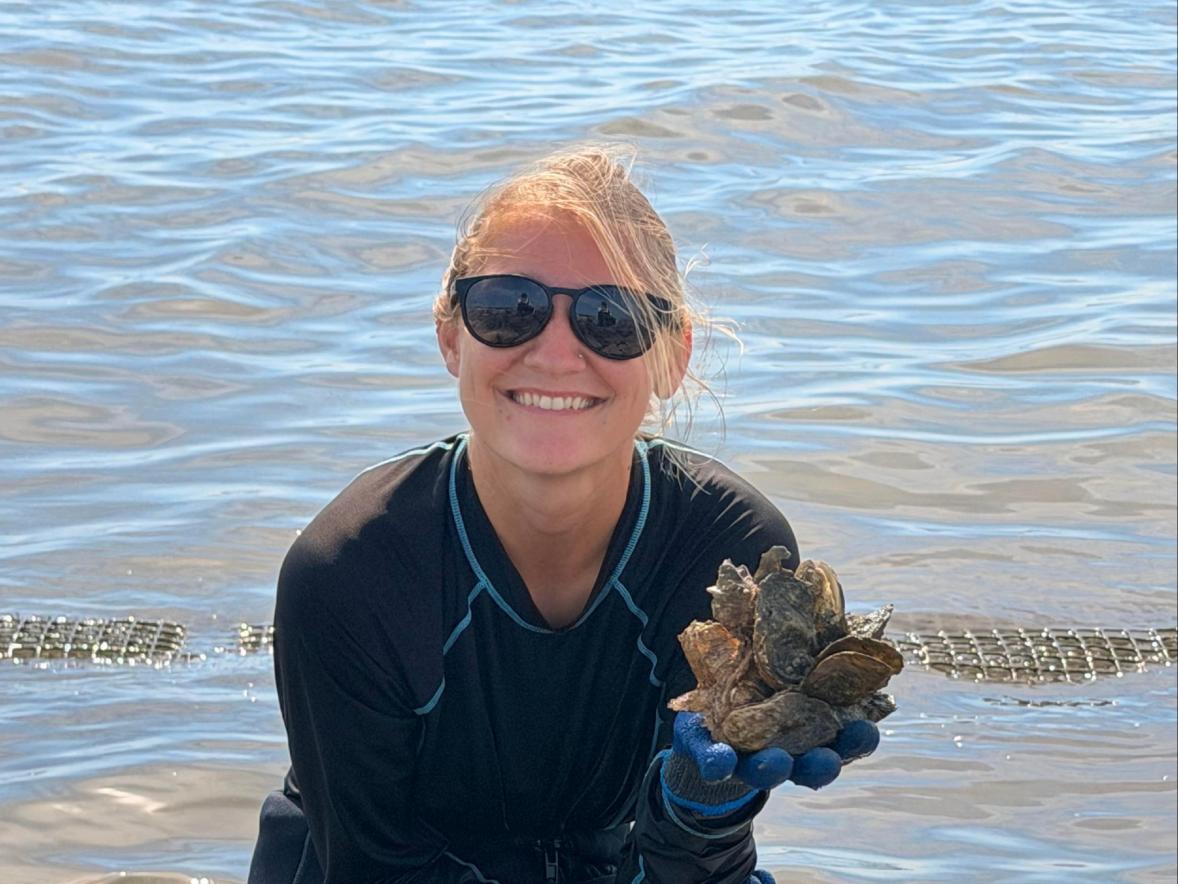




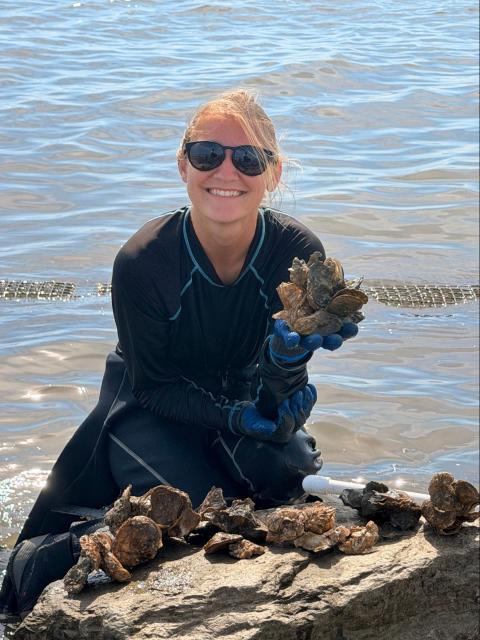
More than 80% of Mobile Bay’s oyster population has declined since 1950. Kayla Boyd ’19 is working to bring it back. As oyster project manager for Mobile Baykeeper, Boyd leads restoration efforts in Mobile Bay, working with oyster farmers, commercial fishermen, researchers, agencies and coastal communities to rebuild reefs that are critical to the Gulf ecosystem and the people who depend on it.
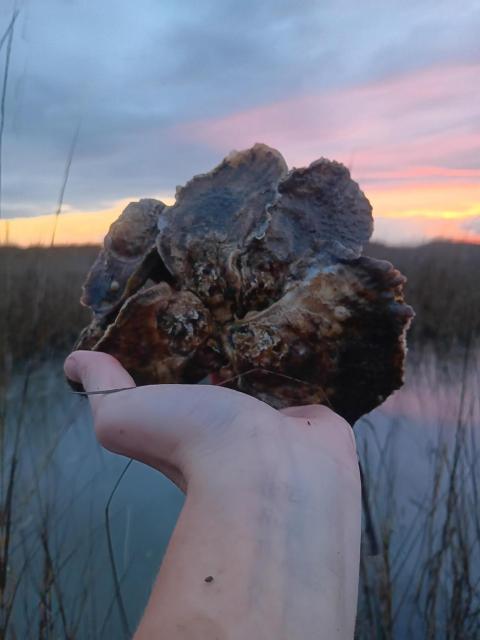
The stakes extend far beyond the oysters themselves. Oyster reefs provide habitat for juvenile fish and invertebrates, help reduce wave energy along coastal marshes and filter pollutants from the water. A single oyster can filter up to 50 gallons of water a day. The reefs also support fishing, seafood production and coastal communities whose economies and traditions are tied to the bay.
Mobile Baykeeper has set a goal of planting 10 million oysters and creating nearly 200 reefs by 2030. For Boyd, that long-term work is about restoring an ecosystem that has supported Coastal Alabama for generations.
“It’s not hopeless,” Boyd said. “We as a community are going to bring this back around. We’re going to do this together.”
That work is the latest chapter in a scientific career that began far from the Gulf Coast. Growing up in Hammond, Wisconsin, Boyd spent her childhood exploring lakes and streams and knew she wanted to pursue science. She chose UW-Stout Polytechnic because she wanted an applied education where she could build relationships with her professors and classmates.
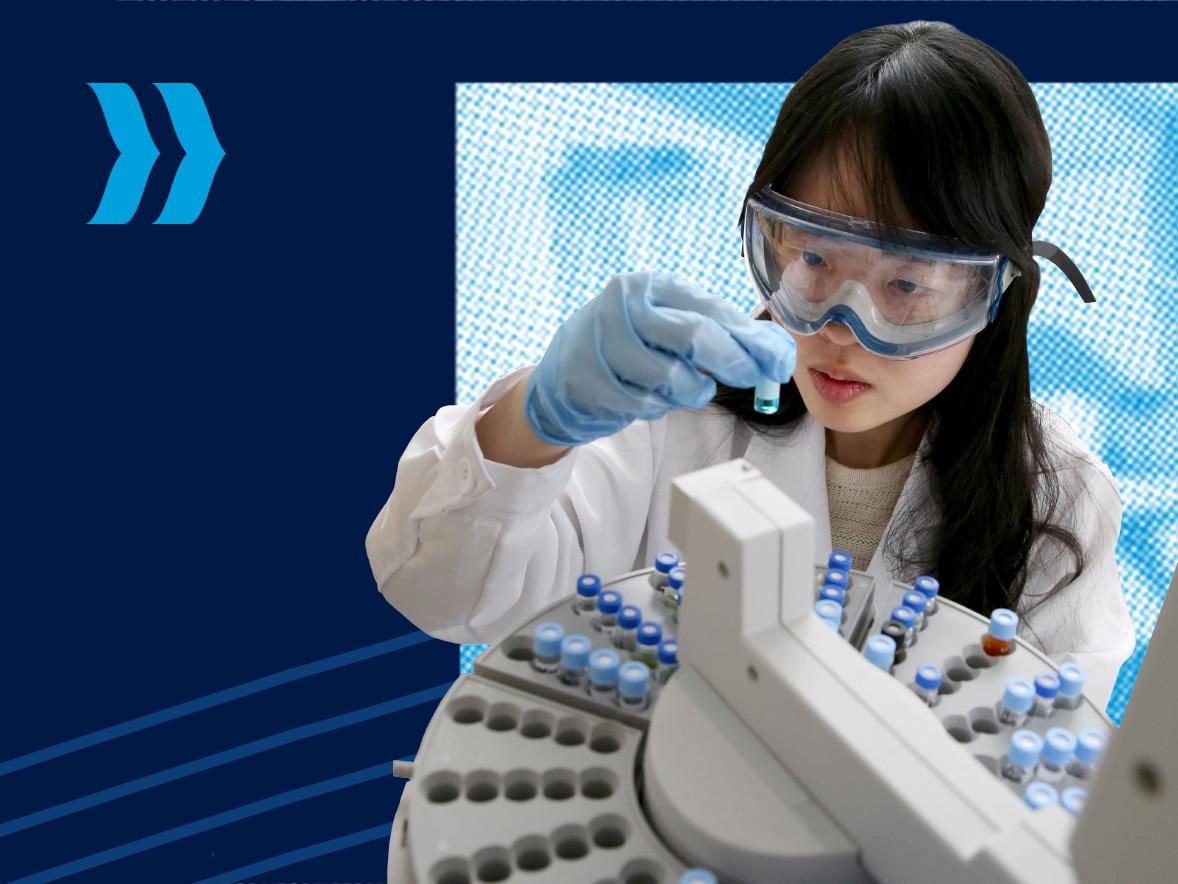
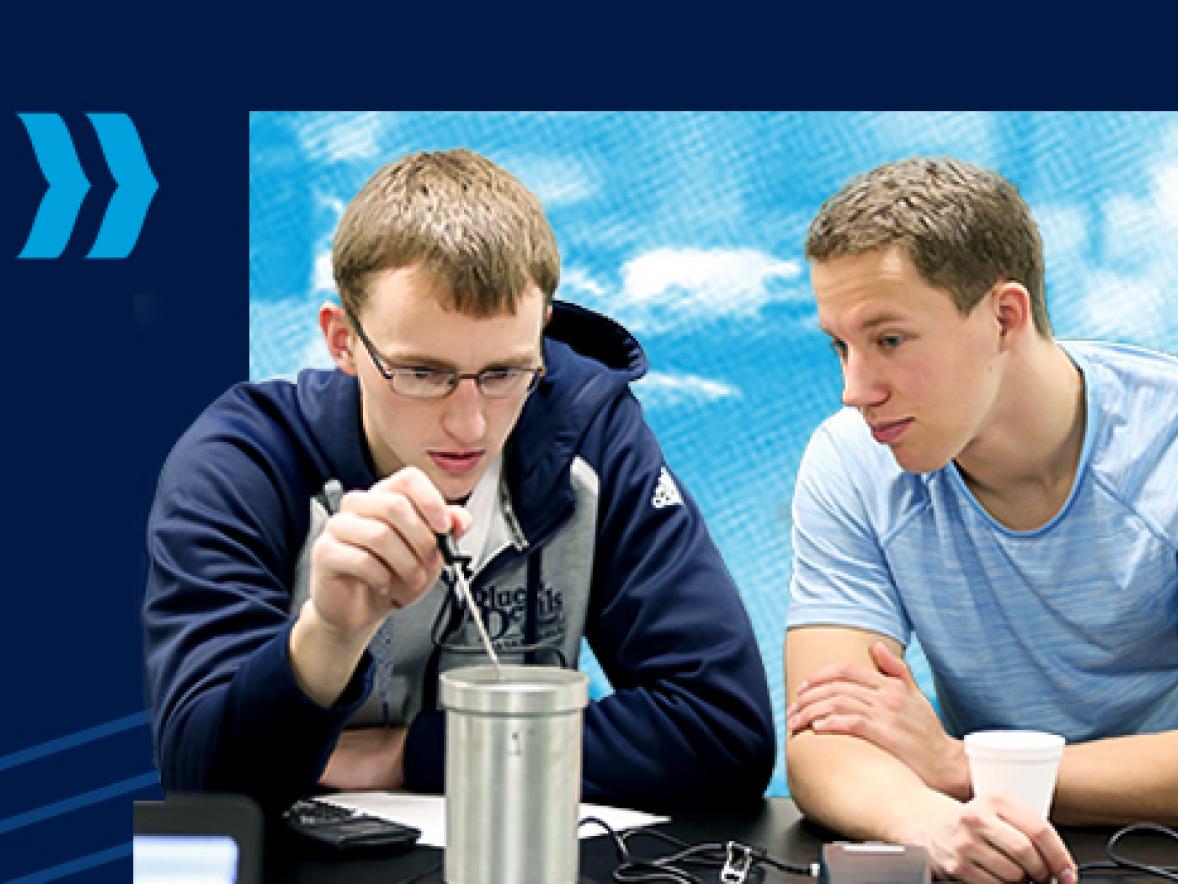
At UW-Stout Polytechnic, Boyd worked as a research and laboratory assistant across areas including proteomics, botany, biotechnology, fish genetics and microbiology. She became particularly interested in understanding how environmental changes affect living organisms.
A study abroad experience in Belize expanded that perspective. Seeing changes in habitat and their effects on wildlife pushed her to think beyond what happens at the cellular level and consider how organisms respond to changes in their broader environments.
One of her most meaningful research experiences came through work with honey bees, where she helped investigate possible causes of colony collapse disorder. The work eventually contributed to research papers, something Boyd remains proud of today.
“I’m very proud of that,” she said. “There’s papers about it coming out and I’m proud to be able to point at those and know I contributed to that.”
When Boyd entered graduate school in Alabama, she turned her attention to a new species: oysters. During her PhD research, she studied how adverse environmental conditions affect oyster energy use and mortality. She also worked with oyster farmers who were trying to understand why their oysters were dying.
The questions she pursued were shaped in part by what communities needed to know. The goal was not simply to conduct research, but to provide information that could help people make decisions.
“That is probably the most proud scientific component of my career,” Boyd said. “To be able to provide accurate and adequate information to help somebody in a short span of time.”
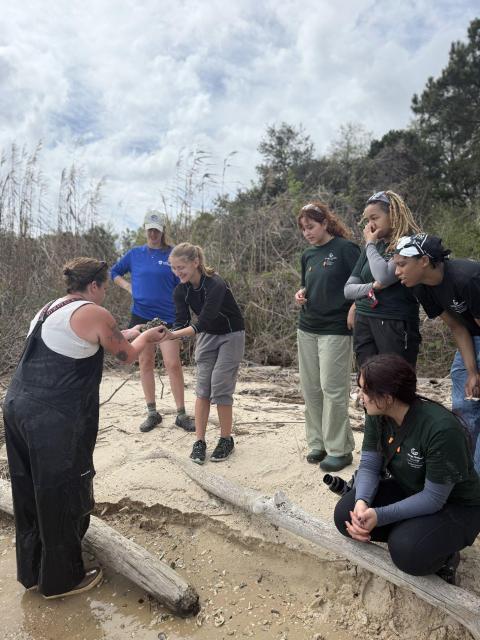
That same philosophy now shapes her work with Mobile Baykeeper. Boyd moves between very different groups in her role, working with people harvesting oysters, people farming them, scientists studying them and agencies responsible for coastal resources. She also communicates with members of the public who may understand the bay through generations of lived experience rather than scientific research.
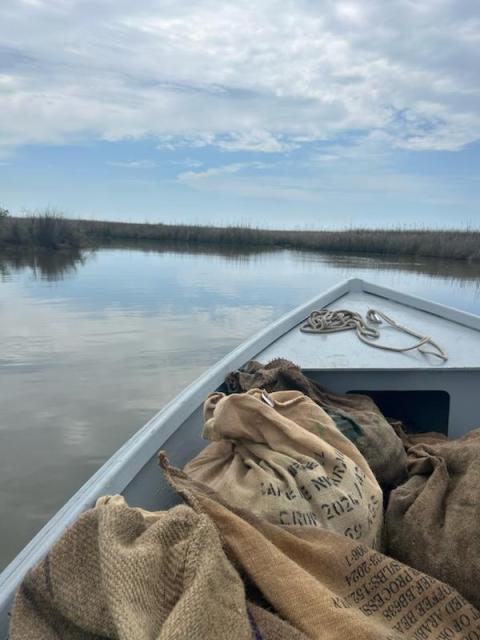
She sees those perspectives as complementary. She can take what she hears from communities and turn it into research questions. She can take scientific findings and explain why they matter to someone whose livelihood depends on the bay.
Rather than focusing only on the oyster itself, Boyd talks about what a healthy oyster population can mean for the larger ecosystem and community. When oysters return, fish and shrimp gain habitat. Healthier reefs can help protect shorelines and improve water quality. And the people who fish, harvest seafood and rely on coastal tourism benefit from a healthier bay.
Today, finding even one oyster can be notable enough for someone to send Boyd a photo. Her measure of success is a future when oysters are once again common throughout Mobile Bay. She imagines throwing a concrete block into the bay, leaving it for a year and pulling it out covered in oysters. That future may take decades, but Boyd is willing to work toward it.
“I want to be sitting at my bay house,” she said. “And I want to look over Mobile Bay and say, yeah, she’s OK. We’ll be OK.”
Looking back, she credits UW-Stout Polytechnic’s hands-on experiences and close relationships with professors for preparing her for a career she could not have predicted when she enrolled.
“Stout provides so many different opportunities to get involved in a variety of different things,” Boyd said. “You never know what way your career is going to go. You never know which direction you’re going to end up doing. It could take you to Alabama and study oysters.”
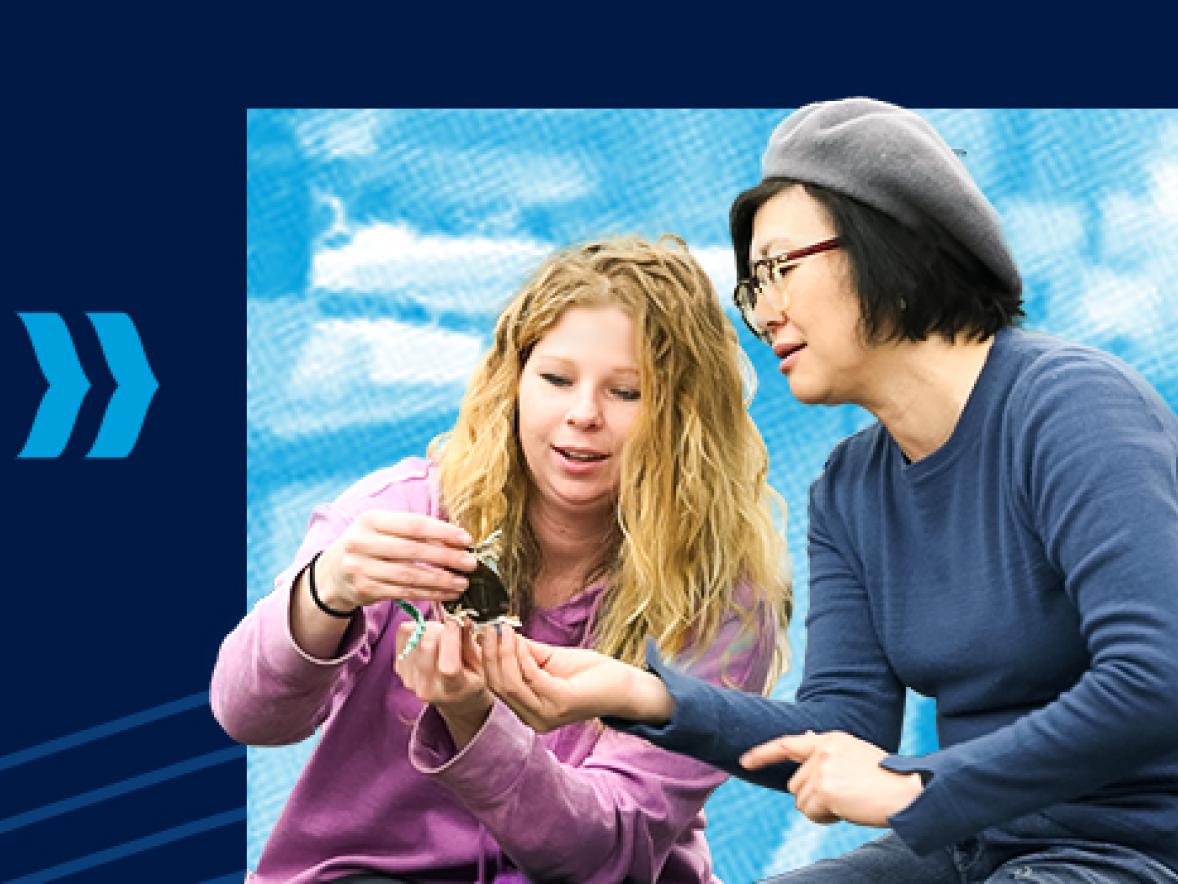
She still returns to UW-Stout Polytechnic when she comes home to Wisconsin, often making a point of walking through the biology building to see who is around. The professors who taught her were not simply instructors. They were invested in preparing her for whatever came next.
That training gave Boyd the freedom to follow her curiosity wherever it led. Today, that curiosity is helping restore an ecosystem thousands of miles from where her scientific journey began, helping restore Mobile Bay one oyster reef at a time.