





Communication design connects people to ideas or products through the power of storytelling, offering an entire experience in just a few short words or images. It is more than an advertisement. It is meant to cause people to pause and consider what they are seeing, with the aim of informing, inspiring, or stirring an emotional or behavioral response.
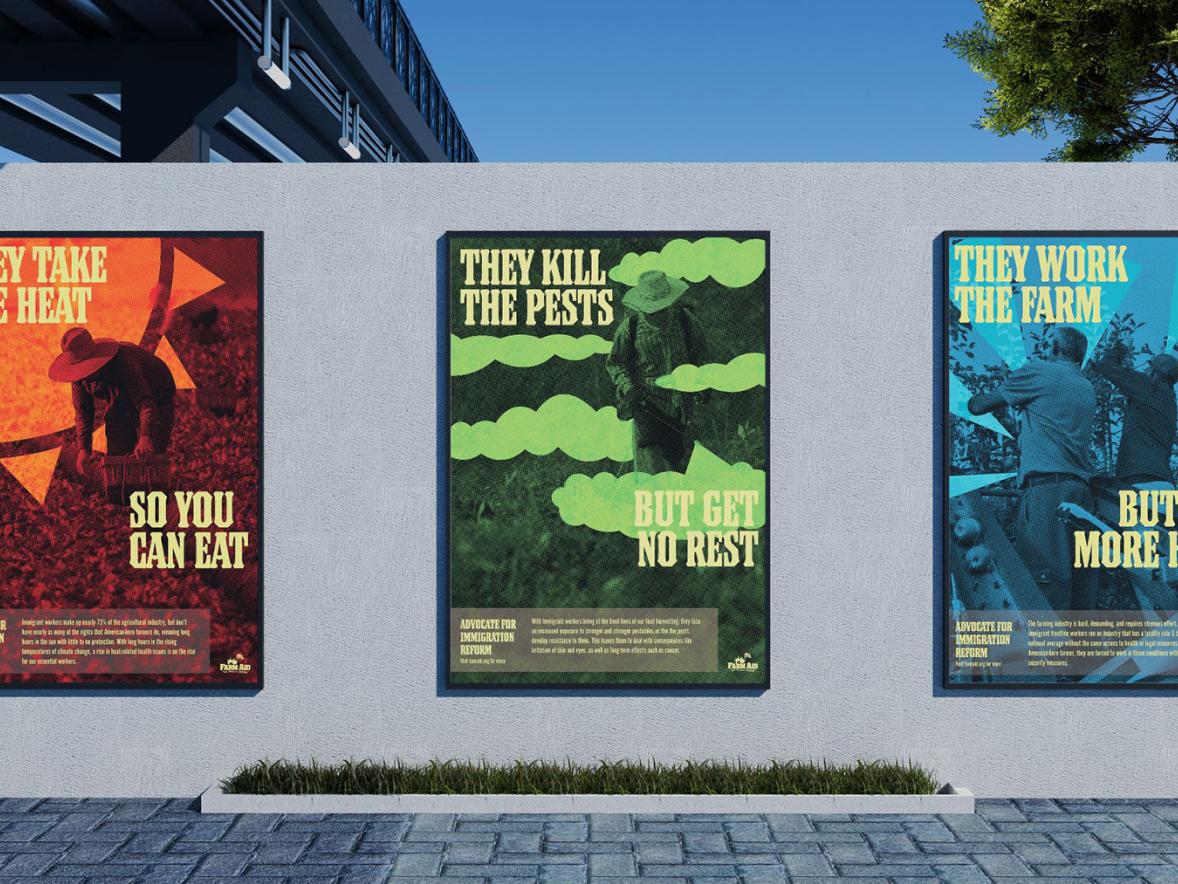
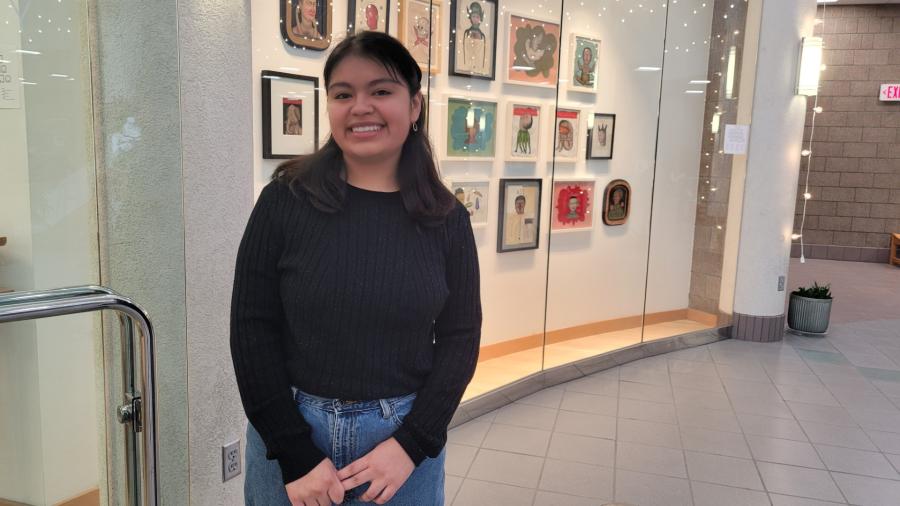
UW-Stout Polytechnic graphic design and interactive media senior Sam Mireles-Melgarejo was recently awarded a national AIGA Worldstudio D×D Scholarship for her communication designs: a three-part poster series advocating for immigration reform on behalf of farmworkers and bilingual packaging inspired by Pajarete, a Mexican beverage tradition.
“I was honored to receive this scholarship, which will allow me the time to be more involved in important conversations surrounding social justice, representation, and design, while worrying less about the cost of college experiences,” said Mireles-Melgarejo, who has minors in graphic media and print management and Spanish.
Nine award winners and five honorable mentions were selected from 204 applications. Among the winners were students from large art institutions, including Savannah College of Art and Design, Columbia University and Otis College of Art and Design.
“While our program is well known in the region, Sam’s scholarship award proves that UW-Stout Polytechnic students produce work on par with the best in the country. Our graphic design and interactive media students embody the polytechnic experience by applying their skills across multiple media and collaborating with adjacent disciplines. Sam’s projects and portfolio are great examples of the high-quality work coming from the Midwest,” said GDIM Program Director Katie Lupton.
AIGA, the professional association of design, together with DxD (Diversify by Design), are in the 31st year of the scholarship program, which encourages social and environmental responsibility and cultural awareness in the next generation of artists and designers.
Poster series strives to start productive conversations
Growing up in Abbotsford, in rural Wisconsin, Mireles-Melgarejo saw firsthand the effects of the agricultural industry on immigrant workers, who make up a large percentage of the industry but without the same rights as American-born farmers.
Mireles-Melgarejo’s poster series depicts the harms and dangers that immigrant farmworkers face, despite being an essential part of the workforce, and is meant to advocate for social dialogue and productive conversations.
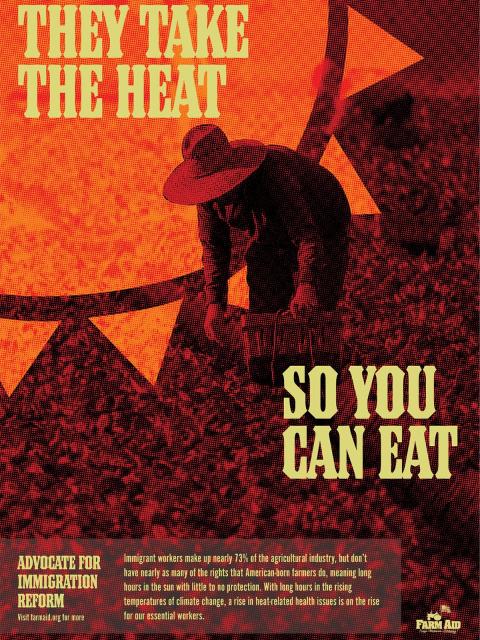
“Although this is a very complex issue, starting with acknowledging what these workers do for the food supply merits more than working in exploitative conditions without proper protections, both on a greater social scale and in the farm environment,” Mireles-Melgarejo said. “When viewing these posters, I’d like people to take a step back and take in the bigger picture. We are all people working together to keep our systems running, but I’d like to invite people to draw back the curtain behind why it is important to take care of those who put food on the table, regardless of status.”
Her main source of inspiration was the relationship between immigrant farmworkers and the environments they work in. Reminiscent of spaghetti western movie posters and film credits, the series has bold colors and graphics and features photos of immigrant workers in fields and orchards and phrases that cause the reader to pause:
- A red poster states, “They take the heat so you can eat.”
- A green poster states, “They kill the pests but get no rest.”
- A blue poster states, “They work the farm but face more harm.”
Each poster also offers facts and statistics to accompany the statements, as well as a call to visit Farm Aid for more information.
“I tried to find organizations that have put the effort and resources into gathering the information necessary to advocate for this mission. Farm Aid, the organization that is featured in this series, is a nonprofit music festival that works to expand knowledge about agriculture, food justice, and taking actions to change the system for a more equitable and vibrant American farming industry,” Mireles-Melgarejo said.
“Among those viewing this series would be people who are drawn to advocate for food justice or those who may be unfamiliar with the difficulties of farming in general. This series tugs to a very specific situation, with the people working in these conditions still being moms, dads, sisters, brothers and neighbors,” she added.
Campana Pajarete shares traditions, offers representation
Mireles-Melgarejo created the brand Campana, Spanish for bell, to package Pajarete, a traditional Mexican crème liquor. Pajarete is made with raw milk, high alcohol by volume (ABV) sugar cane distillate, chocolate, sugar and instant coffee. Campana offers a safer and more accessible alternative to the experience, made with processed milk and a lower ABV content.
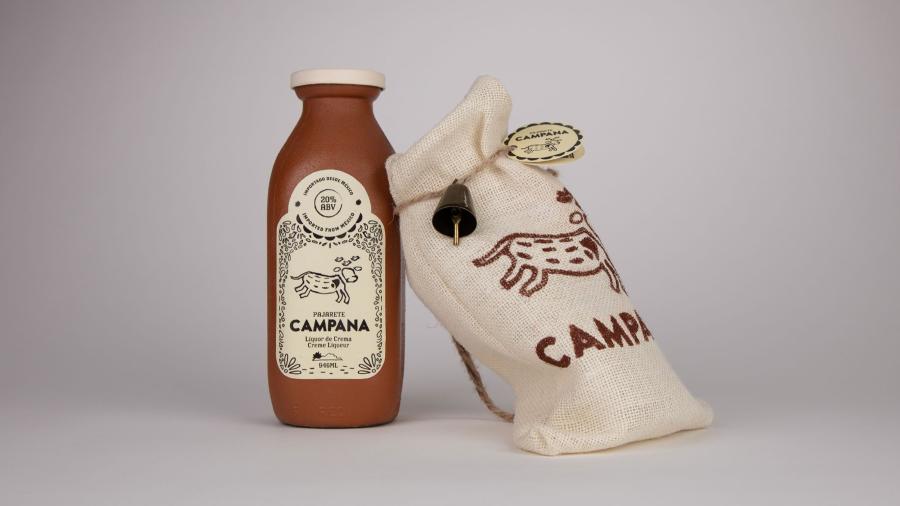
“What was once an alcoholic beverage that represented herdsmen’s early day of work has now transitioned into a drink that represents gathering and community,” she said. “Campana encapsulates the social gathering that the origins of this drink have evolved into, with the target audiences being those who have tried the beverage in its traditional form, and are looking for a safer, more accessible alternative, or those who are looking to know more about the story of its Mexican traditions.”
Mireles-Melgarejo created the logo for Campana by carving a relief stamp of a cow and small birds, representing herdsmen’s early mornings. The terracotta milk bottle features a bilingual label explaining the traditions behind Pajarete, including an outline of the state of Jalisco, where it originated. It’s packaged inside a burlap bag tied with twine and a bell, also representing the start of the day.
“The bilingual packaging is meant to reach a broader audience and help them connect to the product beyond their personal desires. It helps people to see a representation of themselves, acknowledges their existence in the world and offers the preservation of their rich history,” Mireles-Melgarejo said.
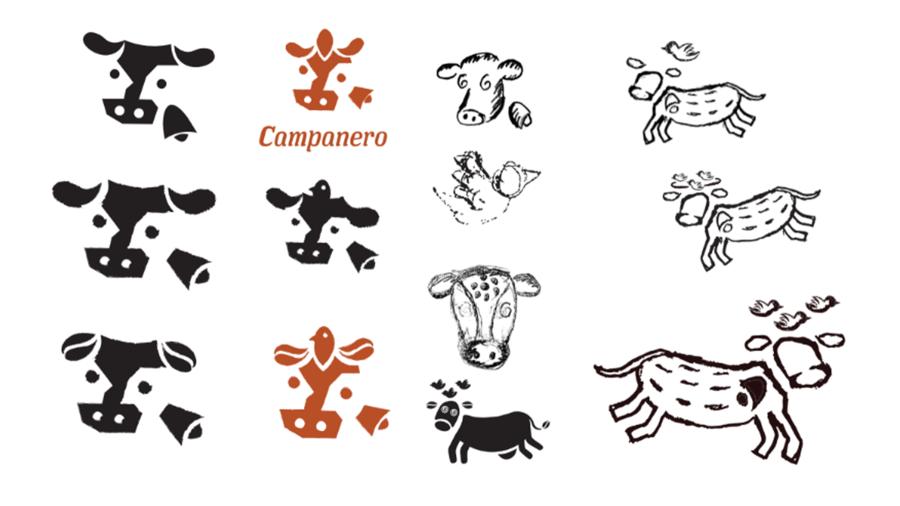
She researched firsthand accounts of the creation and meaningfulness of Pajarete through social media posts and stories. She also conducted a competitive analysis of similar products in the market, including Clase Azul, an ultra-premium tequila bottled in hand-painted ceramic decanters and capped with an iconic bell; and Five Farms, a farm-to-table cream liqueur made in County Cork, Ireland.
“I wanted to find out how to create a packaging experience that did Campana Pajarete justice without saturating the market with something expected. The design for Campana’s packaging uses textures, like terracotta, familiar to Mexican artisanry, and a design that attracts with organic illustrations,” said Mireles-Melgarejo, who plans to graduate in fall 2027 or spring 2028 and is considering careers in prepress, color management, web design or packaging.
“Special thanks to the graphic design department and Nagesh Shinde for challenging my creative limits, the Multicultural Student Services office, Avigdor Edminster, Cortney Benjamin, and M. James Heu for their support in my endeavors and in the scholarship application process,” she added.
UW-Stout Polytechnic’s School of Art & Design, one of the largest public art schools in the Midwest, offers bachelor’s degrees in animation and digital media; game design and development-art; graphic design and interactive media; illustration; industrial and product design; interior design; studio art; arts administration and entrepreneurship; fashion design and development; and video production, as well as an M.F.A. in design.