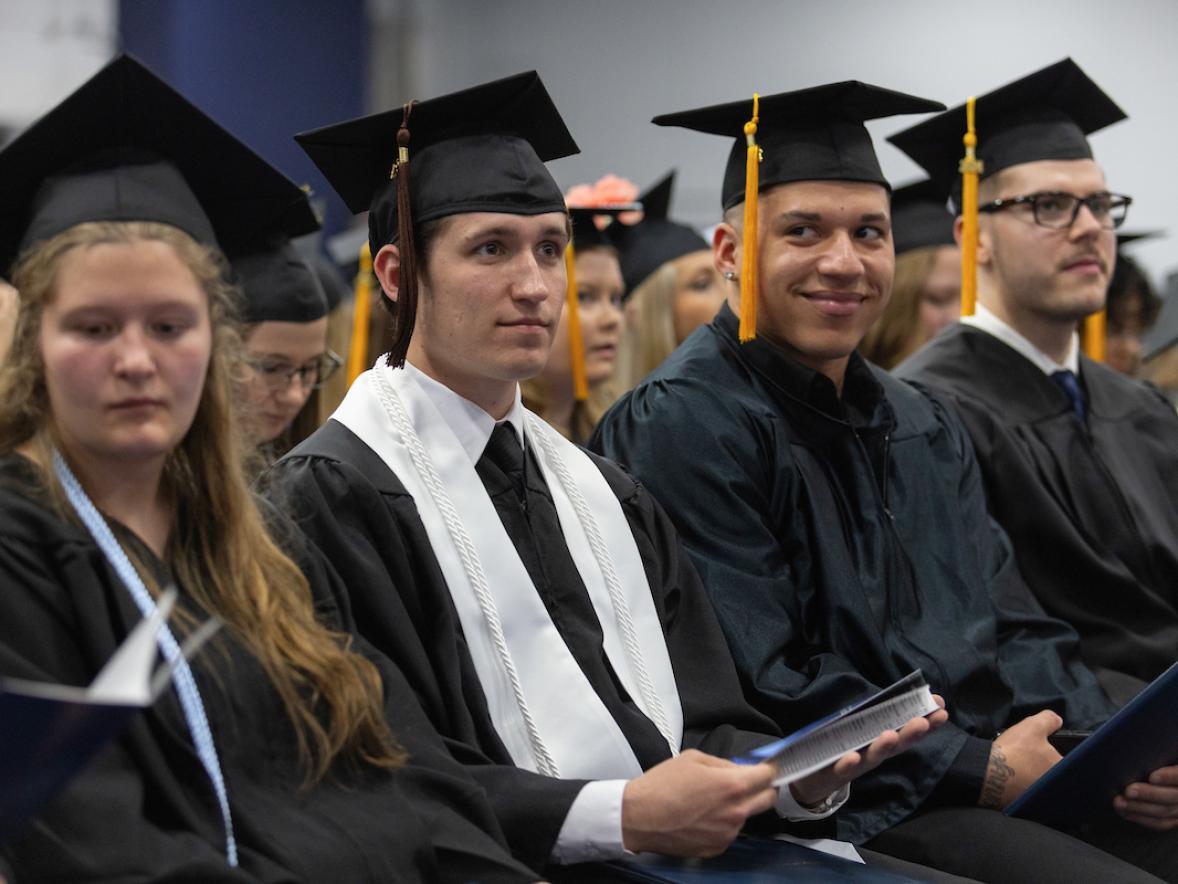




Our transfer-friendly program lets you bring in up to 60 transfer credits from prior coursework or professional experience. This means you can graduate faster without sacrificing the quality of your education. Learn more about our transfer pathways.
Transform Lives Through Justice Studies
UW Stout Polytechnic’s Bachelor of Science (B.S.) in Criminal Justice & Rehabilitation prepares you to recognize the factors related to criminal justice policy and practice. It incorporates the tenets of rehabilitation for the offender, as well as social policy amendments. The program prepares students for holistic participation in the variety of fields in the criminal justice system. The program focuses on critical thinking skills, interpersonal communication and public policy and practice in an ethical manner.

$58K Average Starting Salary of Criminal Justice Graduates
Become a certified Wisconsin police officer while earning your degree—an opportunity that's unique, both regionally and nationally. Our collaborative agreement with the nearby Chippewa Valley Technical College's Law Enforcement Academy meets the criteria of the Wisconsin Department of Justice, Bureau of Training and Standards and the Wisconsin Law Enforcement Standards Board. Credits from the CVTC academy apply to your bachelor's degree.
Career-Defining Criminal Justice Curriculum
Hands-on, applied learning and individualized program advisement will prepare you to graduate in four years and pursue career opportunities in law enforcement, community corrections, adult and youth offender rehabilitation programs, court programs and correctional administration.

Program Overview
Graduate ready to meet the varied needs of offenders, such as mental health and substance abuse, and get them the treatment and resources needed to prevent re-offending. Our faculty of experienced criminal justice professionals will provide you with the education and training to:
- Analyze the nature and causes of crime.
- Integrate and apply human relations skills and counseling to the rehabilitation of public offenders.
- Apply case management and interviewing skills to prepare and monitor case plans for offenders and prepare accurate reports and investigations.
- Participate in community outreach and liaisons with related support service providers and offenders' families.
- Demonstrate cultural sensitivity and examine criminal justice issues associated with racism and oppression.
Transfer-Friendly Program

Take Your Career Further in Law
Use the Request Information form to receive a program summary and learn more about the B.S. Criminal Justice & Rehabilitation.
Request Information
Industry-Experienced Faculty Instruction
Forget TA-taught classes and 200-person lectures. Building close relationships with our industry-experienced and academically accomplished criminal justice and rehabilitation faculty will play a key role in your polytechnic education. Learn more about your future instructors!
"I was given the opportunity to attend the Law Enforcement Academy while still enrolled at UW-Stout. This experience was great because of all the networking connections I made, and it put me one step ahead of many other students."
~ DeMarcus Zeroth ('17)OfficerMenomonie Police Department
Professional Internships in Criminal Justice & Rehabilitation
Take your education into industry and earn while you learn through UW-Stout Polytechnic’s award-winning Cooperative Education & Internship Program (CEIP) and other placements. Unlike traditional internships, our professional paid and unpaid credit-earning experiences connect you with leaders in your field, including state, county and city entities and regional research and advocacy groups, to ensure you’re set up for success long before you graduate. More than a third of Stout students accept positions after graduation with their internship employer.
Recent Internship Employers
- Allied Universal
- Center for Homicide Research
- Drug Enforcement Administration
- JusticePoint
- Lee County Probation
- Positive Alternatives, Inc.
- Regional Police Departments
- Wisconsin Department of Corrections
Select Internship Position Titles
- Behavior Technician
- Community Service Officer
- Electronic Monitoring Specialist
- Officer
- Probation Officer Intern
- Programs Intern
- Resident Counselor
- Security Officer

100% of Graduates Are Employed or Continuing Education Within 6 Months
Graduate Ready to Solve Tomorrow’s Criminal Justice & Rehabilitation Challenges
Each year, Stout criminal justice and rehabilitation graduates are among the most sought-after hires to enter the workforce, routinely beating out applicants for positions in law enforcement and social rehabilitation services. Why? Everything you learn at Stout enhances the skills you'll use on day one of your career. Where others list their education, you’ll be able to identify your experience.
Select Recent Employers
- Allied Universal
- Anoka County Sheriff's Office
- Eau Claire Police Department
- La Crosse Police Department
- Lakeview Hospital
- Menomonie Police Department
- Mental Health Resources, Inc.
- Merrick, Inc.
- Middleton Police Department
- Minnesota Department of Corrections
- Oneida Nation Of Indians of Wisconsin Human Resource Department
- Positive Alternatives, Inc.
- Rice Lake Police Department
- State of Wisconsin
- Wisconsin State Patrol
- Workforce Resource Inc.
Upon the completion of the program, the student will (a) understand terms, operations, trends, and theories of criminal justice; (b) analyze the nature and causes of crime; (c) apply treatment techniques used within probation, parole, or prisons used to rehabilitate (i.e. alter attitudes, values, behavior) adjudicated persons; (d) apply theory and practice through an approved field placement. The graduate will be able to:
- Analyze the nature and causes of crime.
- Describe theories, types, and incidence of criminal behaviors.
- Describe the judicial process as it pertains to adults, juveniles, and persons with disabilities, in regards to civil commitments.
- Describe prevention, treatment, education, and rehabilitation programs for public offenders.
- Integrate and apply introductory knowledge of human relations skills, and counseling to the rehabilitation of public offenders.
- Apply case management and interviewing skills to preparing and monitoring case plans for offenders and preparing accurate reports and investigations.
- Refer offenders for community-based counseling treatment, employment, and independent living support as needed.
- Participate in community outreach and liaisons with related support service providers and offenders’ families.
- Demonstrate cultural sensitivity and examine criminal justice issues associated with racism and oppression.
Development of the program objectives has been informed by stakeholder groups, employers, the Program Advisory Committee, and guided by the Academy of Criminal Justice Sciences Certification Standards for Academic Programs.
Advisory Committee Members
| First Name | Last Name | Title | Organization |
|---|---|---|---|
| Eric | Anderson | Criminal Justice Director | Chippewa Valley Technical College |
| Sara | Benedict | Dunn County Diversion Court Director | Dunn County |
| Kevin | Doll | Associate Professor; Program Director, B.S. Human Development & Family Studies | UW-Stout |
| Kevin | Drzakowski | Associate Dean | UW-Stout |
| Jamie | Arenz | First-Year Advisor, Advisement Center | UW-Stout |
| Brad | Erickson | Deferred Prosecution Coordinator | Dunn Co. Victim/Witness Assistance Office |
| Greg | Kalosis | Police Chief | UW-Stout |
| Kellie | Kamholz | Director | Positive Alternatives |
| Andy | Felton | Associate Professor; Chair, Counseling, Rehabilitation & Human Services Department | UW-Stout |
| Daniel | Kelsey | Professor; Program Director, M.S. Rehabilitation Counseling | UW-Stout |
| Julia | Kraemer-Martens | Workforce Development Specialist | Minnesota Department of Corrections |
| Richard | Gee | Associate Professor; Program Director | UW-Stout |
| Abby | Tengwall | Career Service Advisor | UW-Stout |
| Joseph | Strano | Corrections Field Supervisor | Wisconsin Department of Corrections |
| Jeffrey | Sweat | Professor | UW-Stout |