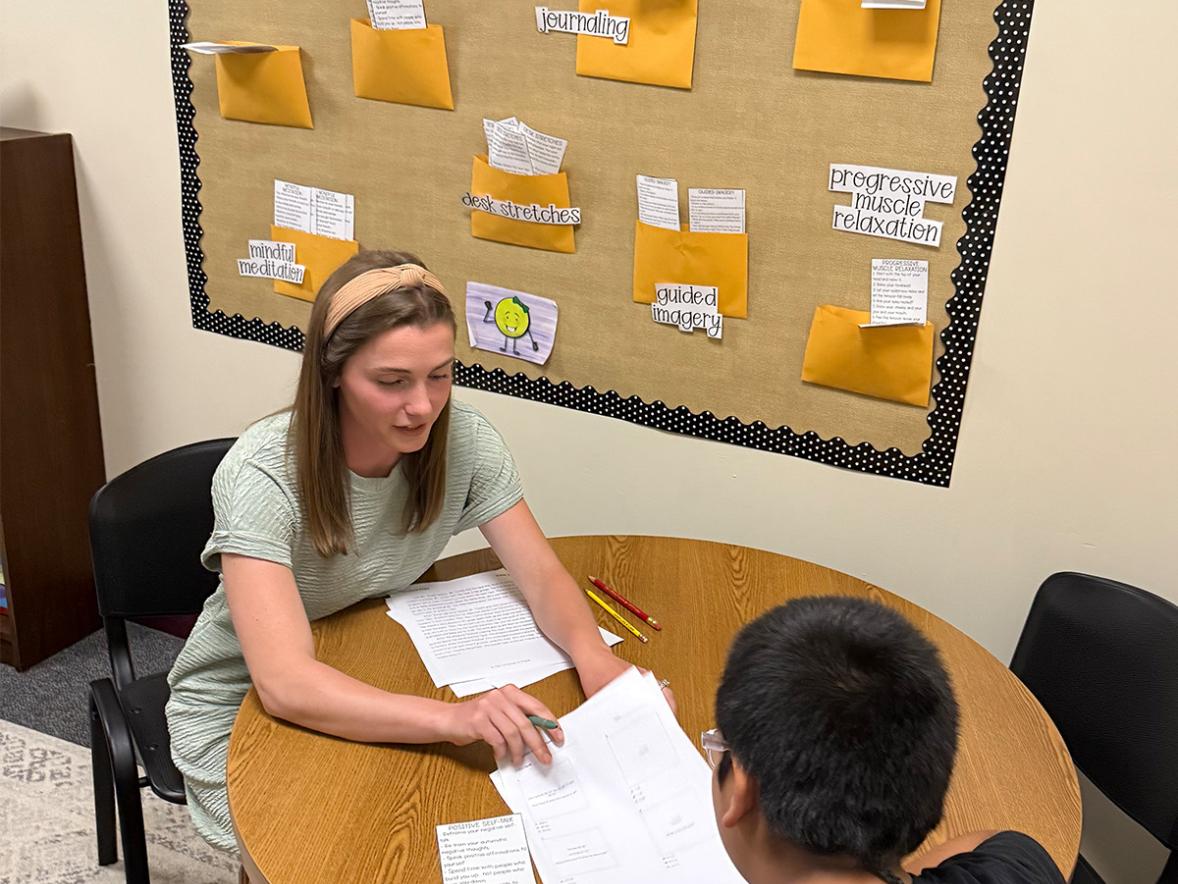




Every day, school psychologists create and maintain connections that make a difference in the lives of children and youth, empowering students, families and educators through collaboration. They support students in building skills, confidence and a sense of belonging. They partner with educators and families to better understand and respond to students’ needs. And they help schools by aligning efforts, improving support systems and creating environments where all students can succeed, learn and grow.
Yet, while the National Association of School Psychologists (NASP) recommends one school psychologist for every 500 students, Wisconsin averages about one for every 772 students. The national ratio is one for every 1,071 students.
“So, many students, especially in rural districts, wait too long for evaluations, counseling and crisis support. At UW-Stout Polytechnic, we welcome approximately 12 new graduate students each year and give them high-quality, hands-on practical training, so they’re ready to work on Day One. Most of our graduates choose to stay and serve Wisconsin schools, and because we’re NASP-approved, our program prepares them for practice nationwide,” said Assistant Professor Angela Axelrod, M.S.Ed. & Ed.S. in school psychology program director.
Supporting the whole child: School psychology program aims to fill nationwide shortage
Continue ReadingSupporting social-emotional learning to build essential skills
As student mental health, emotional well-being and learning challenges are on the rise, school psychologist Carly Cummings sees the most impactful approaches to empower students as consistent, data-informed and centered on connection, early intervention and prevention.
She places high value on nationally recognized frameworks to improve their students’ lives, such as the Multi-Tiered System of Supports (MTSS), which supports academic, behavioral and social-emotional needs for general education and special education students.
While Cummings’ time in the field so far has been short – she earned her Ed.S. in school psychology in 2023 – she continues to see growth in data-driven decisions made within the special education evaluations she conducts and the implementation of evidence-based instruction to fill student skill gaps.
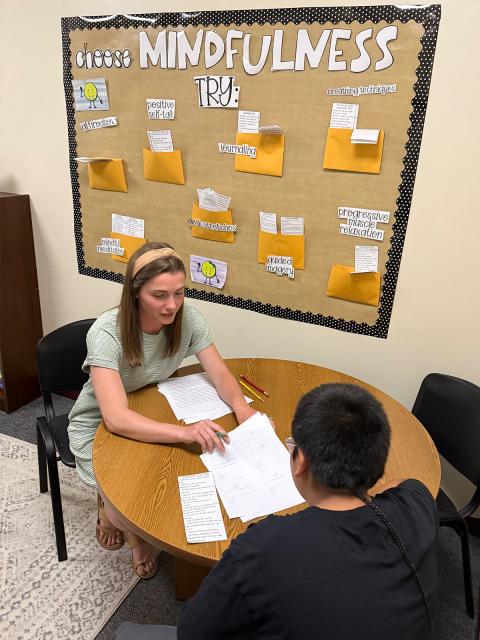
Cummings is a school psychologist at the Lac Courte Oreilles Ojibwe School, located on the Lac Courte Oreilles reservation in north-central Wisconsin. She has worked to strengthen the school’s MTSS as the most impactful practice to help ensure students receive the right level of support early, as well as social-emotional learning to build essential skills, like self-regulation and problem-solving, Cummings said.
“One of the biggest lessons for me, as well as for students, staff, and families, has been the importance of flexibility and connection. Academic success is deeply intertwined with emotional well-being,” she added. “For students, their ability to engage, regulate, and persist depends heavily on feeling safe, understood and supported. When students experience stress, uncertainty, or unmet social-emotional needs, learning naturally takes a back seat.”
Cummings is proud to collaborate with her coworkers to maximize student and family engagement, as it’s incredibly important for student success and wellbeing. “There is nothing that compares to having a direct impact on a child’s social, emotional, and educational success and wellbeing,” she said. “Being a school psychologist allows you to reach students, staff and families all in one. You have the ability to advocate for children to achieve success, however success looks for them.”
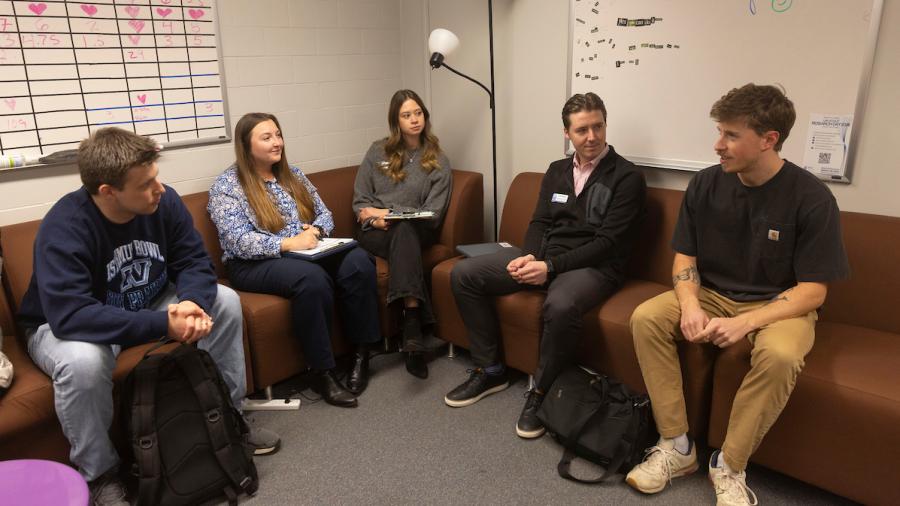
UW-Stout Polytechnic and the Lac Courte Oreilles Ojibwe School have collaborated since 2023, introducing M.S.Ed. and Ed.S. school psychology students to Cummings’ role at the K-12 school, visiting various classes, including special education math and reading classes; social-emotional learning (SEL) classes; and Ojibwe language classes.
National School Psychology Week is Nov. 9-13
UW-Stout Polytechnic’s school psychology faculty and graduate students will join thousands of other communities in celebrating National School Psychology Week, Nov. 9-13. This year’s theme, “Inspire Connection,” highlights how school psychologists build meaningful relationships that support students, strengthen collaboration and transform school communities.
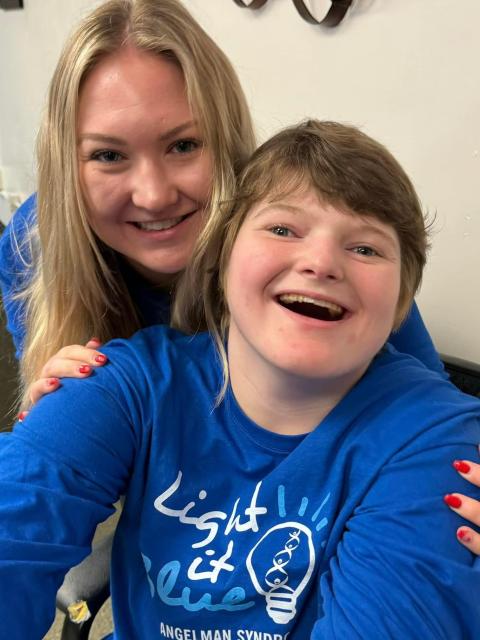
“Growing up with an older sister with a disability, I’ve seen firsthand how important it is for students and families to have people in their corner who understand their needs and advocate for them,” said M.S. school psychology graduate student Hailey Willner. “That experience has played a huge role in shaping my passion for working with students with disabilities and ultimately led me to pursue school psychology.”
One of the things Willner loves most about the field is the variety of ways school psychologists can make a difference. “We do so much more than assessments and evaluations. We work alongside students, families, and educators to identify barriers, provide support and help create environments where all students can be successful,” she said. “Through my practicum experiences, I’ve already seen how meaningful this work can be, and I hope to be a school psychologist who not only helps students navigate challenges but also recognizes their strengths and advocates for their individual needs.”
UW-Stout Polytechnic’s school psychology program is thankful for the 22 field practicum supervisors and internship supervisors from across Wisconsin and Minnesota school districts who support school psychology graduate students and who serve as a bridge between the classroom and real practice.
“Our field and internship supervisors open their schools to our students and include them in the actual work: evaluations, team meetings, consultation with teachers and families, and the hard calls that no textbook fully captures. Just as important, they model the judgment, ethics, and care that set a good school psychologist apart. Our students graduate confident and ready for the field because these professionals invest so generously in their growth, and we are deeply grateful to them,” Axelrod said.
UW-Stout Polytechnic’s counseling, rehabilitation and human services department offers five master’s programs – including the COAMFTE-accredited marriage and family therapy program, CACREP-accredited clinical mental health counseling program, NASP-accredited school psychology program, and programs in rehabilitation counseling and school counseling – as well as three undergraduate programs, minors and certificates.