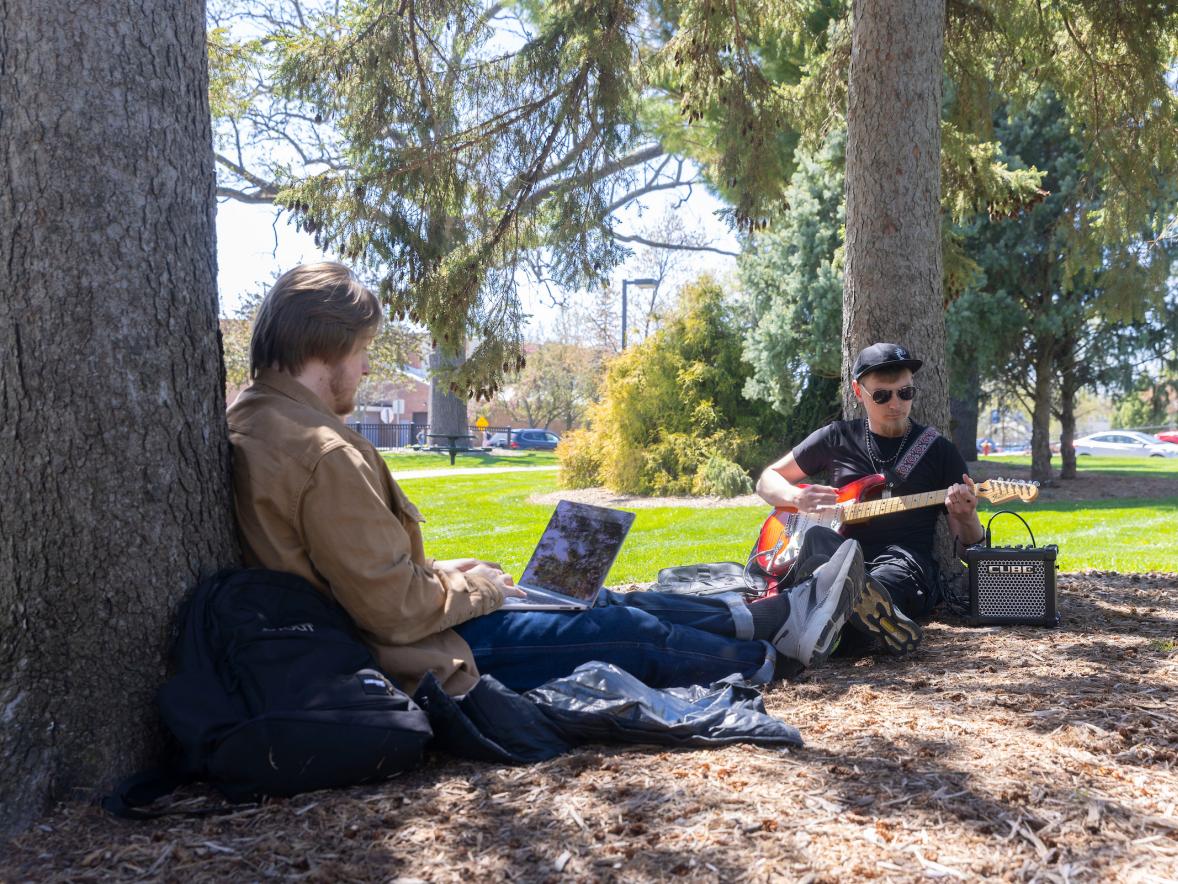






The Arbor Day Foundation has recognized UW-Stout as a Tree Campus for its dedication to enhancing community well-being through tree education, investment and community engagement.
The recognition is the latest chapter in the university’s long-running dedication to sustainability, which includes being named a national Green Ribbon school in 2024 by the U.S. Department of Education, earning bronze-level designation as a Bike Friendly University by the League of American Bicyclists, and being a charter signatory of the Carbon Commitment, a higher-education pledge for carbon neutrality. In recent years UW-Stout has also made major investments in solar panels, LED lighting and other upgrades that are estimated to be saving hundreds of thousands of dollars in energy costs annually.

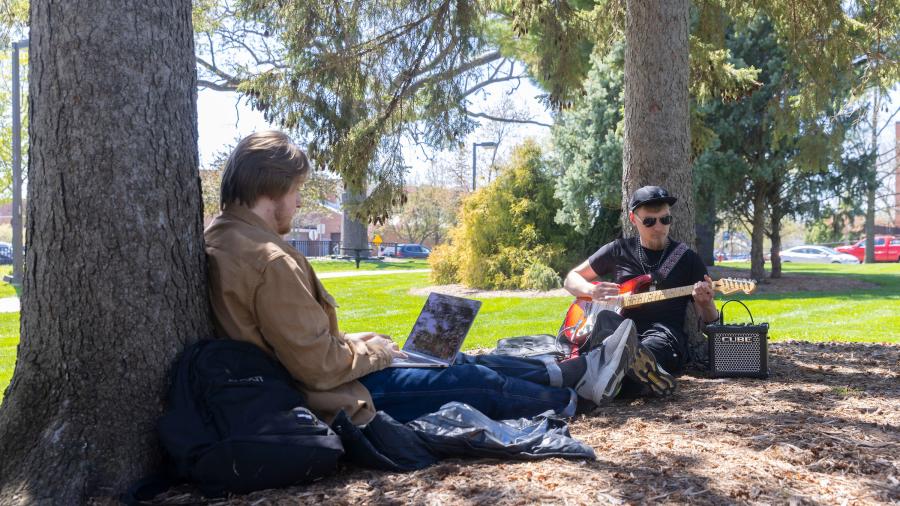
And while trees may be low-tech compared with photovoltaic panels, they also have a tangible impact: Trees can lower the energy cost of campus facilities by providing shade cover, reducing extreme heat, improving air quality and boosting physical health benefits for students and staff. In addition, trees improve students’ mental and cognitive health, provide an appealing aesthetic for campuses, and create shaded areas for gathering and studying.
“Trees have the power to inspire learning and improve well-being,” said Michelle Saulnier, Vice President of Programs at the Arbor Day Foundation, a global nonprofit with a mission to inspire people to plant, nurture and celebrate trees. “By growing campus green spaces, forward-thinking higher education leaders like UW-Stout are cultivating vibrant learning communities that also benefit the greater environment.”
To earn Tree Campus recognition from the Arbor Day Foundation, colleges and universities must uphold five core standards including maintaining an advisory committee, setting a campus tree care plan, verifying annual investment in the tree care plan, celebrating Arbor Day, and creating a service-learning project aimed at engaging the student body.
“I was thrilled to hear that we received this designation,” UW-Stout Sustainability Manager Kadi Wright said. “It’s rewarding to see our efforts recognized, and I look forward to continuing this work as part of the annual process.”
“Trees play a vital role in the college experience,” continued Wright, who holds a M.S. sustainable management degree from UW-Stout. “They offer shade and foster a connection to nature. Students were excited to learn that we were pursuing this designation.”
UW-Stout is now one of only six universities in the state of Wisconsin to have the Tree Campus designation.
Broadening the culture of sustainability
“The Tree Campus designation helps create a broader sustainability culture where sustainability is not just a commitment: It becomes something everyone shares responsibility for in everyday campus life and the student experience,” Wright said.
Much of the credit for fulfilling that responsibility, she added, should go to the campus facilities management and grounds teams for keeping trees healthy, growing and beautiful.
Arthur Kneeland, a senior lecturer in the biology department and co-chair of the Campus Exteriors Development Committee, took a lead role in preparing the Tree Campus application to the Arbor Day Foundation late last year.
“As we explored what was required, we quickly realized that we met the criteria easily,” Kneeland said. “Caring for our trees is in part managing the investment that we have made in this very important visual and emotional part of our campus. So, from a tree care perspective we were already doing everything that the Arbor Day Foundation wanted.”
As part of the process, 846 trees were tallied on campus last fall. “The trees have a tremendous positive impact on campus,” Kneeland said. “They provide shade in many places, reducing heat to buildings and people. They are also an important emotional component of campus life. People like trees – they make us feel happy and calm.”
Not only do trees contribute to shared outdoor spaces – such as the arboretum that encompasses the south lawn of the Memorial Student Center or the 3-acre outdoor classroom – but they contribute to the university’s polytechnic identity as well, which focuses on applied learning beyond the classroom. UW-Stout students apply their studies in sustainability to capstone projects that benefit the environment. For example, students in the B.S. environmental science program as well as in the sustainability and geographic information systems (GIS) minor programs have worked on a number of projects mapping campus trees and conceptualizing what they should look like in the future, Kneeland said.
The annual campus Earth Week celebration, which this year will begin April 20, will also recognize UW-Stout’s new Tree Campus status. In honor of Arbor Day, Kneeland will lead a Tree Tour on the south campus at 4:30 p.m. on Thursday, April 23.
UW-Stout committed to clean energy, recycling
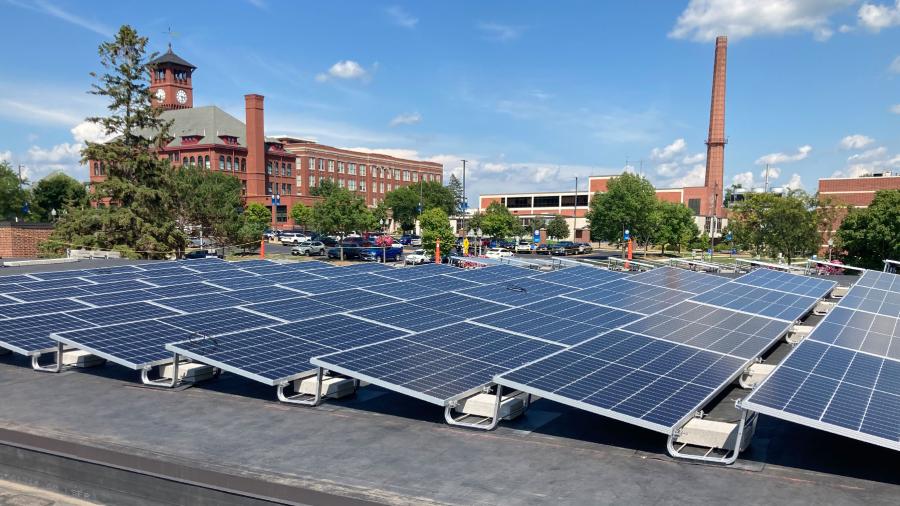
From installing solar panels to adding LED light fixtures, UW-Stout’s focus on sustainability has brought both environmental and financial benefits.
In 2023, photovoltaic arrays were installed on both Jarvis Hall Technology Wing and the General Services Building, which generate 200 kilowatts and 114.4 kilowatts, respectively. The same project included upgraded LED lighting in multiple buildings; installing energy-saving destratification fans in Johnson Fieldhouse and the Multipurpose Room of the Sports and Fitness Center; and weatherizing buildings campuswide. The entire project is estimated to save UW-Stout more than $172,000 in energy costs each year. Four years earlier, a separate LED upgrade project created savings of about $89,000 annually.
In addition, LED retrofits to the dining area and kitchen in Merle M. Price Commons funded through the Stout Student Association Green Fee in 2024 are expected to generate $50,000 in energy savings over four years. Likewise, solar panel installed atop Price Commons in 2018 and 2021 have also generated more than $35,000 in energy savings. These savings directly impact students, who pay the fees that operate the buildings, while also reducing carbon dioxide emissions by hundreds of tons, said Darrin Witucki, Director of the Student Centers.
Student Green Fees have also helped pay for eco-friendly equipment, including an electric mower used on campus and two solar-powered trash compactors, which were placed outside Johnson Fieldhouse to prevent waste from overflowing and contaminating nearby recycling bins during busy times.
UW-Stout has been focused on reducing the amount of waste it produces as well. Last year, the university was a winner in the nationwide Campus Race to Zero Waste, a friendly competition that measures recycling and waste reduction on campuses. Over an eight-week period, UW-Stout students recycled an average of 23 pounds of waste each, earning Medium Campus Per Capita Recycling honors.
UW-Stout offers a B.S. in environmental science and a P.S.M. in conservation biology, as well as minors in environmental health and sustainability.